Kollektion: Dinozauro knogler

🦕

Dinosaur bone – a prehistoric mosaic, mineralized time, and an aura of deep continuity

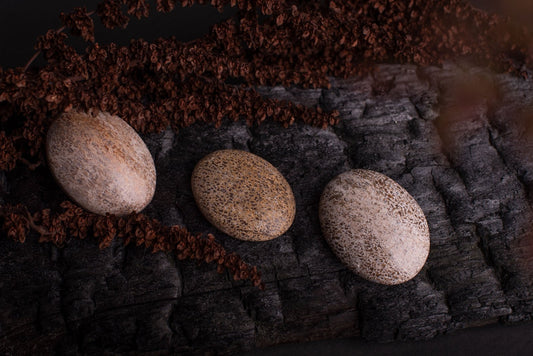
Dinosaur bone is a mineralized fossil in which the once-living the bone’s pores, channels, and small cavities were gradually filled new minerals. In the polished cross-section, the preserved microstructure can open up as red, brown, golden, gray, blue, and a mosaic of almost black cells – a true encounter between prehistoric life a meeting of geological transformation and

✨ What makes dinosaur bone special?

  • Its pattern began as the actual structure of bone: porous areas, dark contours, and irregular “cells” replicates the pores, channels, and zones of growth with different densities.
  • Minerals transformed the biological form into stone: silicon dioxide, calcite, and iron compounds penetrated into the cavities of the buried bone, where they crystallized and helped preserve the fine geometry of the original structure.
  • Each cut reveals another prehistoric map: some specimens are finely reticulated, while others have large elongated cavities, undulating zones, contrasting edges or centers filled with different minerals.
🔮 The aura of dinosaur bone

  • An aura of deep time: the trace of a creature that lived millions of years ago can symbolically remind us that the present moment is just one a layer of the very long and constantly changing history of Earth.
  • An aura of resilience through transformation: the bone did not survive completely unchanged – water, minerals, minerals and time. Nevertheless, its main form remained recognizable, so it can symbolize the strength to change without losing its essence.
  • An aura of curiosity and discovery: the complex fossil pattern can remind us to look deeper, ask how what we see was formed, and preserve a childlike sense of wonder before the vast history of life.

🌋 When an ancient bone became an archive of quartz and colors

  • It all began with rapid burial: sediments protected the bone from complete disintegration, while through them mineral-rich groundwater circulating could reach its porous interior.
  • Permineralization filled natural cavities: as water moved through the bone, dissolved materials were deposited in pores and channels. Some of the original material may have remained, while another part was gradually replaced by new minerals.
  • Agatization created the most colorful fossils: silica-rich solutions left behind microcrystalline quartz and chalcedony, the preserved bone pattern became more durable, and impurities of iron and other compounds gave it brownish, red, yellow, gray, or bluish tones.

Keep the dinosaur bone nearby when you want to look at current concerns from a longer perspective of time, preserve curiosity or remember that transformation does not necessarily destroy what what matters most. Its mineral mosaic can remind us that life leaves traces, and time sometimes does not erase them – it gives them a completely new form.

Look into deeper time. Preserve your curiosity. Let transformation strengthen what truly matters.

Du er mere